When I was really starting to get into tea, I was mostly drinking Japanese and Chinese teas. I had always wondered if Korea had a tea culture as well, considering the close proximity. It turns out that Korea does in fact have it’s own rich tea history. It’s simply not as well known.
The tea produced in Korea is mostly green, though they also produce black tea among others. In fact, Korea has it’s own version of a tea ceremony. The original version of the ceremony was conducted with black tea since that was easier to transport at the time (black tea is fully oxidized unlike green).
There are just a few vendors in the West that I know of that offer Korean teas. I was eager to try a few and find out what made Korean teas so unique. In the past year, I ordered two different Sejak and Woojeon green teas (as well as a balhyocha black tea). This was a good exercise for a tea geek like me, as it was a case in point that just because a tea has the same name doesn’t mean it will taste the same, or even remotely similar.
I would like to clarify the main difference between Sejak and Woojeon before I get into the specifics. Woojeon is the first flush (the first harvested leaves of the season) in March, and Sejak is the second in April. From my understanding, Sejak and Woojeon are both steamed AND pan-fired to stop the oxidation process. This is quite unusual but also explains why they tasted a bit like a hybrid of Chinese and Japanese greens.
For those of you who don’t know, all true tea (tea harvested from the Camellia Sinensis or Assamica varieties) is from the same plant! It all just depends on when it’s plucked and how it’s processed. Without getting into too much of a tangent, most Chinese greens are pan-fired to stop oxidation (the process that happens when the leaves are plucked and oxygen in the air changes the chemical makeup of the leaves) and most Japanese greens are steamed. pan firing often gives greens more of a nutty and toasty quality and steaming can make them taste more vegetative or seaweed like.
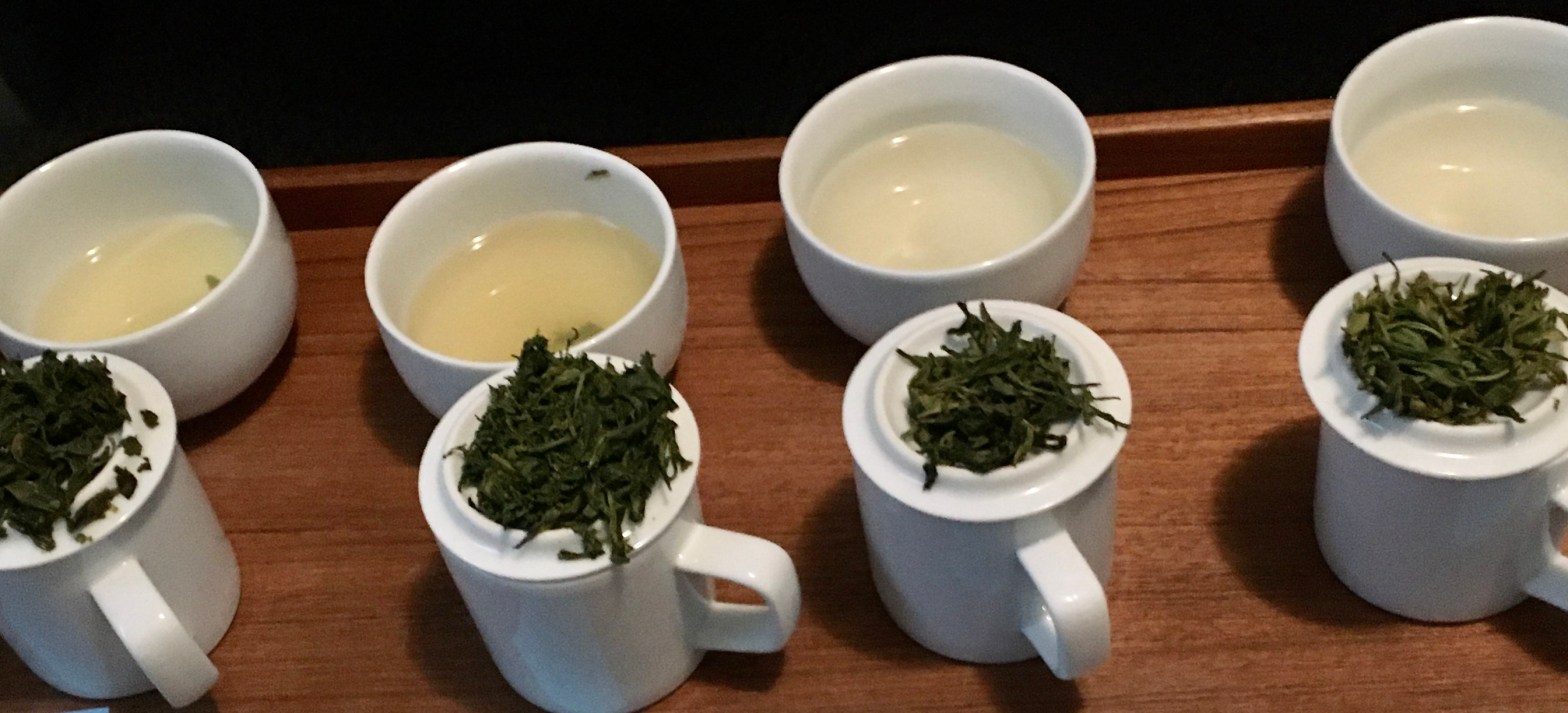
Even just the dry leaf appearance was very different between both brands of Sejak and Woojeon. The first brand reminded me a lot of how some Senchas look. Deep forest green with some long needles and some small broken pieces. The other brand looked vastly different. Much thinner fine needles of slightly varying shades of green.
As for the brewed liquid, the first brand was much more yellow, whereas the second was a very pale and delicate off-white to yellow. The aromas and flavors were very different too. The first Sejak and Woojeon were both much more similar to Sencha with a fuller mouthfeel, grassy and marine quality. The second brand was unlike anything I had tried before. There were notes of toasted nuts, and a creamy mouthfeel. The most unexpected flavor note for me was cocoa! I hadn’t even considered cocoa as a tasting note for a green tea before.
It was a really fascinating and rewarding look at Korean teas. You will ultimately be surprised by tea the more you taste and compare. I hope more of the world pays attention to Korean teas and I for one cannot wait to try more in the future. It’s really one of the least recognized tea countries and they deserve more attention.
For all you tea people, what was a comparative tasting you did recently that really surprised you? Were there any tasting notes that made you reconsider your perception of a certain type of tea? Let me know in the comments! 😀
 Dina's Tea Notes