I had heard of roasting tea at home before, but hadn’t had the courage to try. I heard it was a great way to either revive the flavors and aromas of your already roasted teas or to roast greens that have lost some of their zip. It happens to every tea fanatic…you buy a ton of tea, you forget what you already have, and you don’t drink it in time to enjoy at it’s peak.
This is especially tragic for many greens and green oolongs. They tend to stay freshest within a few months or even weeks of being opened, but not all hope is lost. Of course there are many methods to keep your greens fresh for longer. I sadly have a handful of greens that have been in my cupboard for at least a year or longer, so I desperately wanted to try the roasting experiment on at least one of them.
I looked into whether or not I needed special equipment. There is something called a horoku (also known as a hojiki or horaku) that is used by Japanese tea drinkers at home. knowing the history of tea and tea equipment largely started in China, I was also curious about the origins of this implement. It wasn’t easy to find, but I did find one object that looks a little similar to a horoku. I’m not entirely sure what came first, but I do know that China started roasting tea (and in fact growing and producing) much before Japan. As I stated in a previous post, most Japanese teas are steamed. Hojicha wasn’t invented until the 1920’s.
I don’t own a horoku, but perhaps one day. They are very simple but brilliantly designed. They look somewhat like a side-handled teapot known as a kyusu. They don’t have a lid, and the handle is completely hollow. This is for a very good reason. Once you roast your tea leaves, you pour the contents directly into your tea brewing vessel of choice. So convenient! Apparently you can also use your horoku to toast sesame seeds. I would be careful to make sure it’s very clean if you use it for both, considering that tea would hold on to oils from other foods.
Since I don’t have a horoku, I decided it was still worth it to try with a small frying pan. I have seen many blog posts of people trying this at home with great success. It’s even more important to make sure this pan is super clean since it’s likely you use it for more than just tea. The most important things to consider are med to high heat, small amount of tea leaves or stems (about 5 grams at the most), and constant movement. I also heard that gas is preferred to electric, but in my case that can’t be helped. My tea still turned out very nicely.
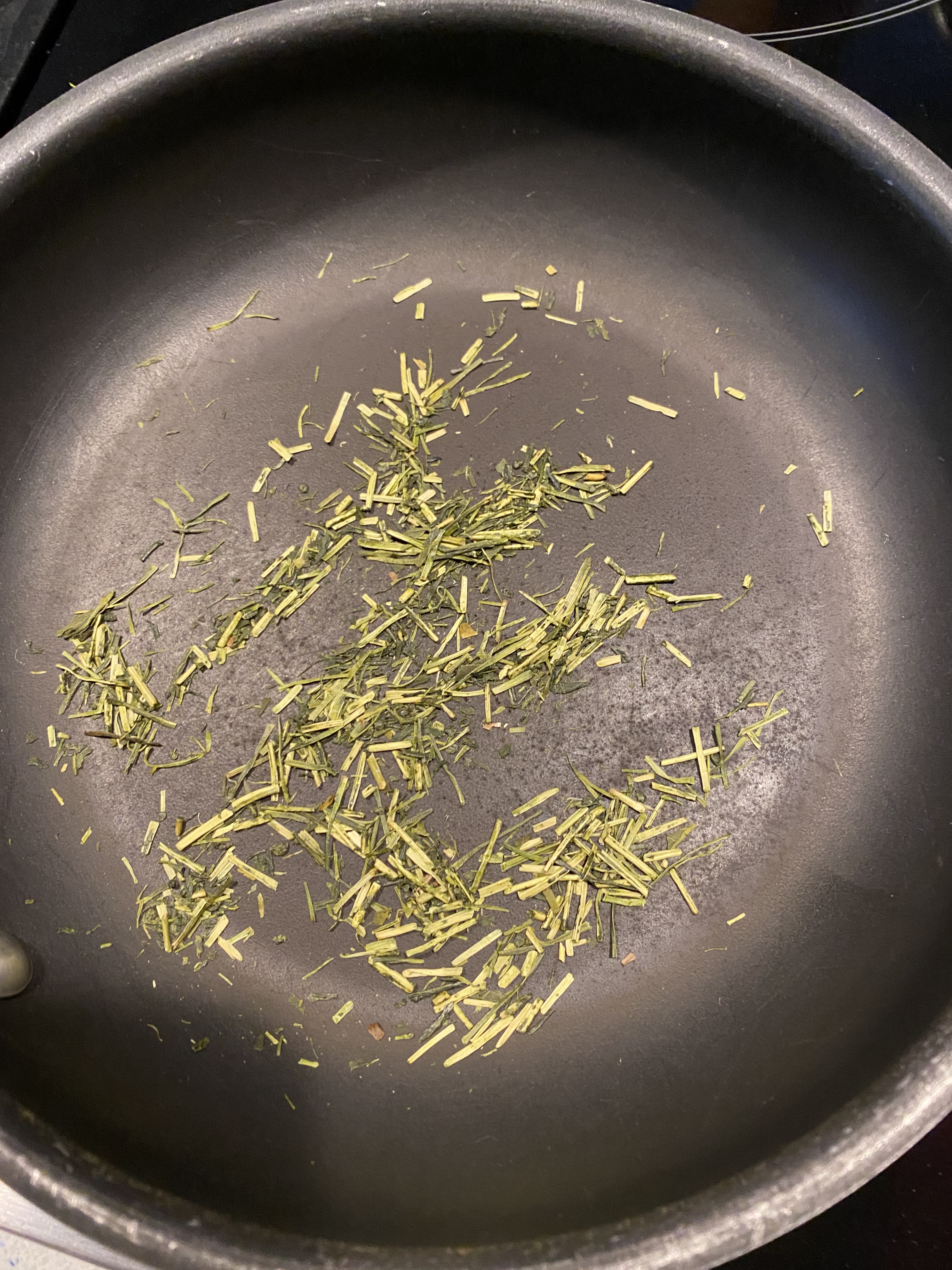
Besides temp, time, and movement, picking your tea is also key. This is definitely not the time to roast your most prized and expensive green, even if it’s been in your stash for a while. I would stick to your older twig teas, sencha, and bancha. You could probably try it with Chinese greens as well. I decided to try my experiment with a nice karigane. My karigane is actually a pretty nice quality for a twig tea, but it has lost some of it’s freshness. It’s made with the stems of the first harvest. That’s something I just learned when researching for this topic! That’s what’s great about keeping an open tea mind. You keep learning more things.
You can also find karigane that is already roasted, and this can be called kuki-hojicha or even bo-hojicha. Stems give the tea a smoother mouthfeel and a sweeter aroma and flavor than fresh green tea. The other great thing about roasted tea is that it has less caffeine and is easier on your stomach. Sadly, roasting the tea does lessen some of the health benefits. There are less catechins than in steamed greens, but it’s still a very healthy choice and can be so comforting in the cold months.
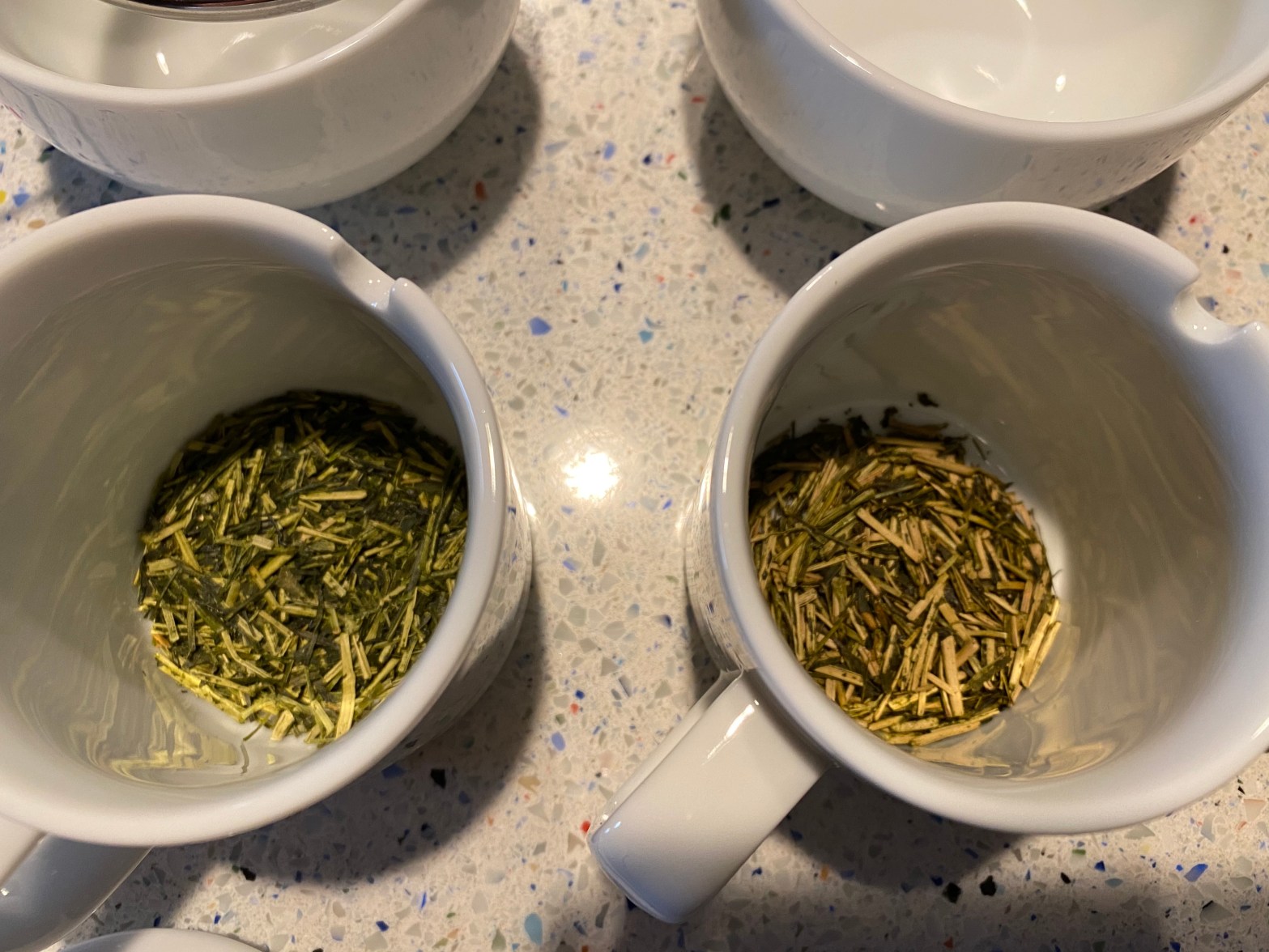
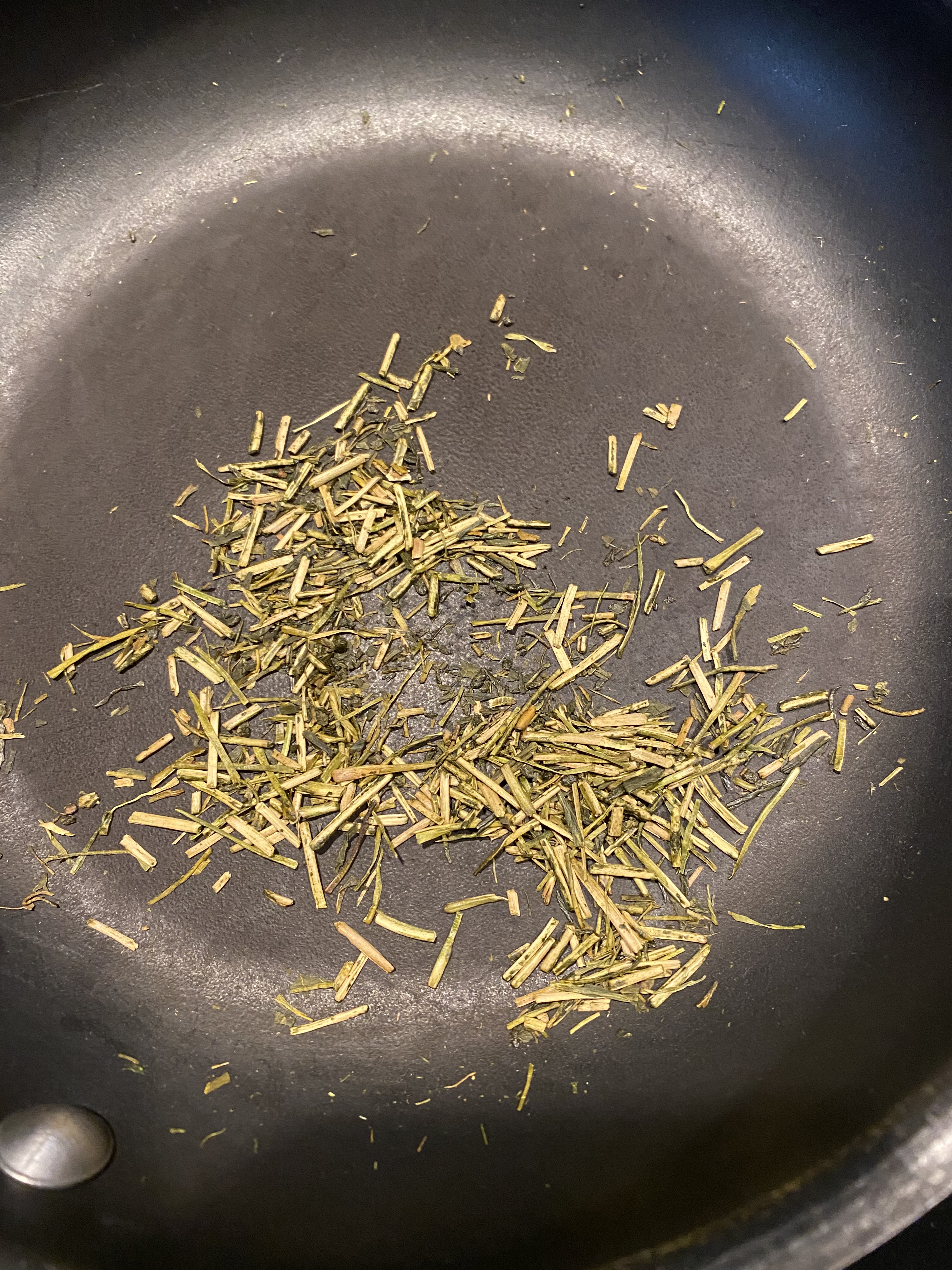
For my experiment, I thought it could be a fun idea to taste the fresh karigane next to my home-roasted variety. since I used my professional cupping sets, I just needed 2 grams of tea. You can of course do up to 5 grams, but I wouldn’t roast a lot at once. It makes it easier to control the roasting process if you don’t overcrowd the pan. I personally just kept the temperature around medium and kept swirling and stirring until I could smell a lovely roasted tea aroma and the tea looked light to medium brown. You can definitely do a darker roast, but be sure to not burn your tea. That would be even more tragic than off-season greens! This whole process probably took me about 3 minutes or so. When I was satisfied, I simply poured the tea into my brewing vessel.
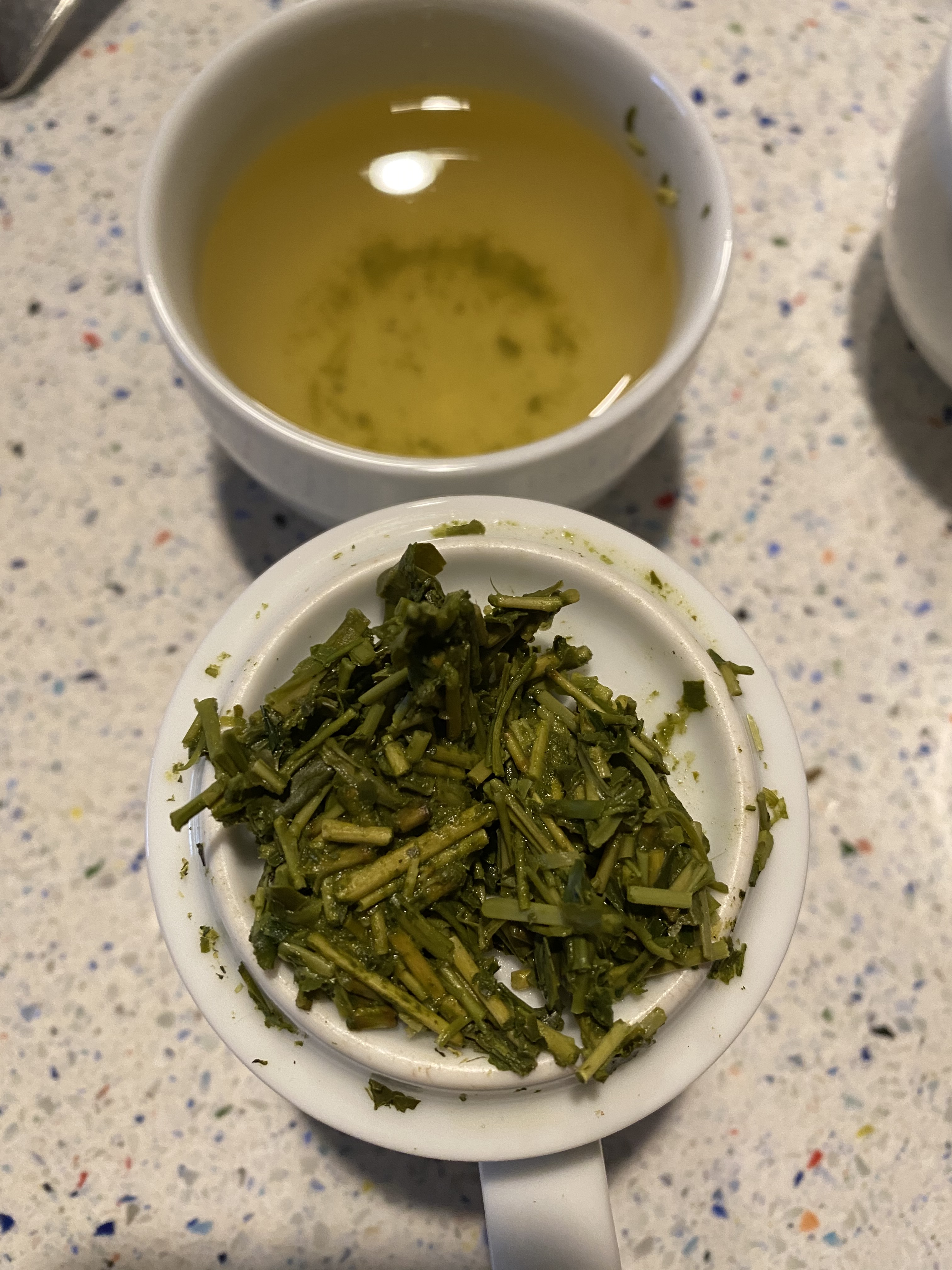
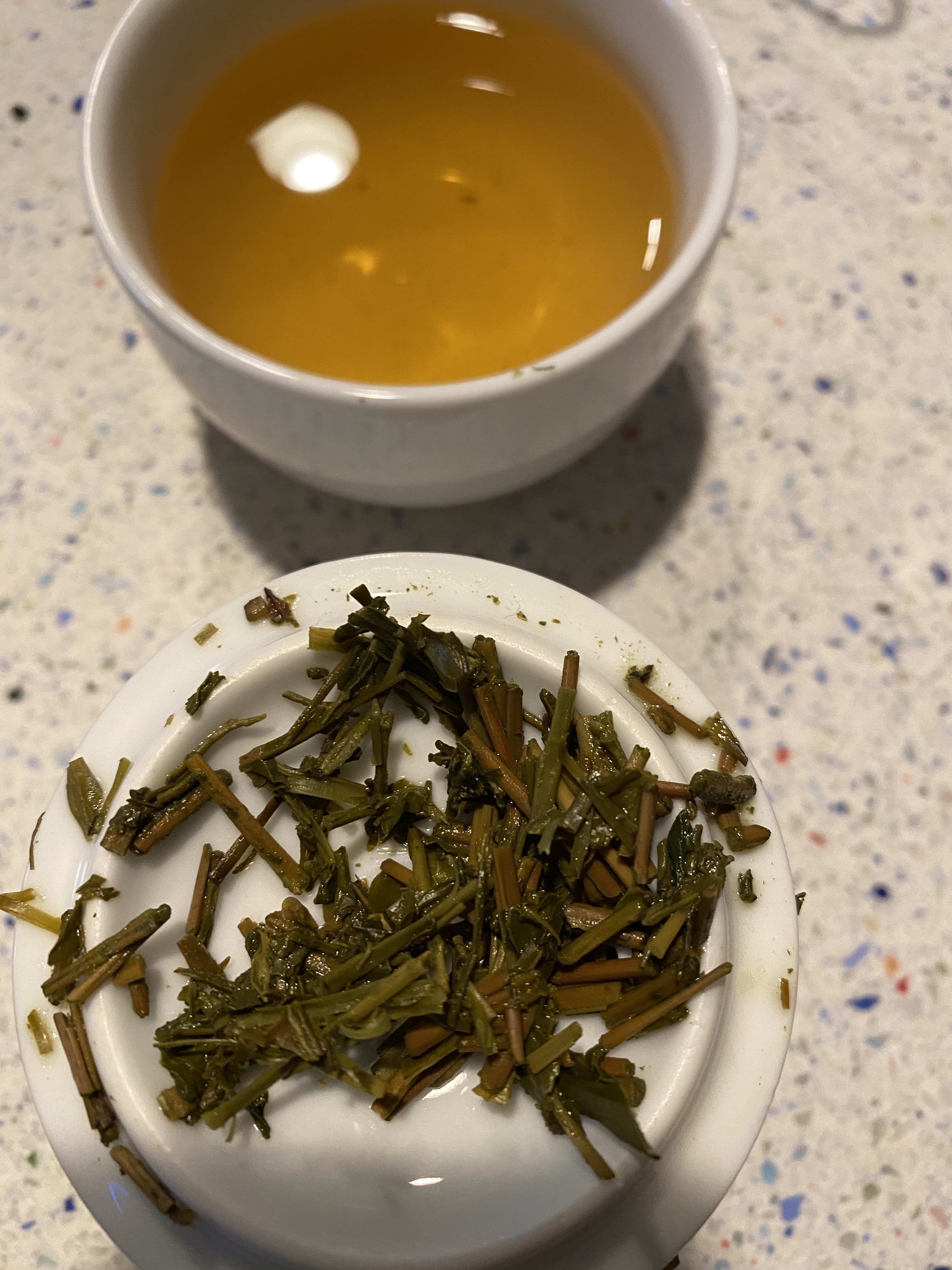
I enjoyed comparing the look, aroma, and taste of the two now different teas. I went by the usual brewing instructions for the unaltered tea. 175 F for 3 min. For my roasted tea, I went with an educated guess. Most hojicha can take a little extra heat, so I hiked the temp up about 20 degrees to 195 F but kept the brew time the same. It turned out great! I was so afraid I would burn the tea. It was perfectly toasty, nutty, mellow, and sweet. Maybe it isn’t as amazing as a professionally roasted tea, but I was still so happy that I could do such a simple but rewarding experiment.
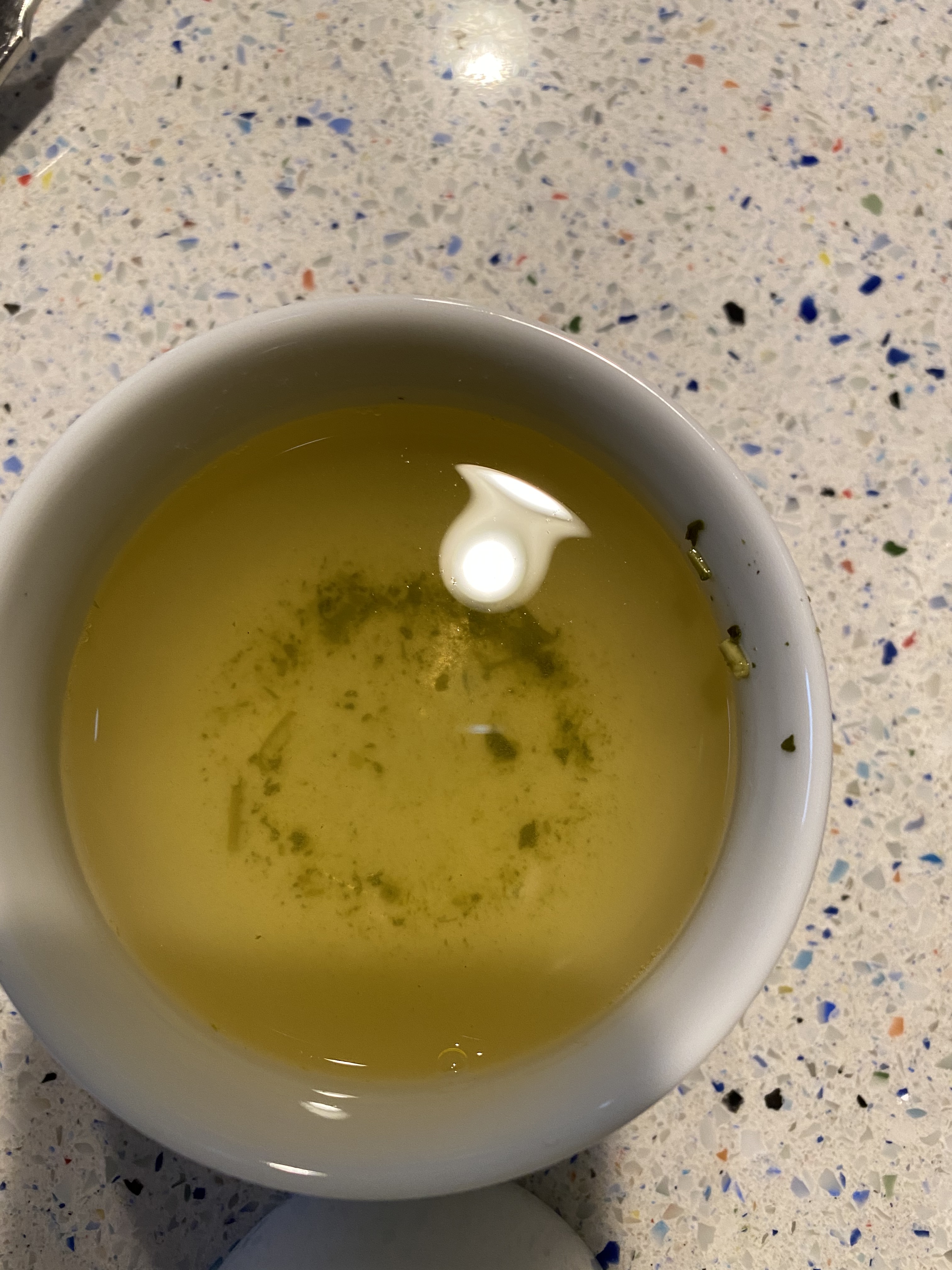
The tasting notes for the original tea are a bit grassy and with notes of umami, but definitely less bitter than a sencha. The mouthfeel is pretty thick since it has small bits of leaves that almost dissolve in the water, giving it a fair amount of heft. I actually love this mouthfeel and the tea is still pretty enjoyable as a regular green. There is a bit of sweetness like steamed snap peas. Very buttery and smooth. The color of the tea is also a cloudy yellow shade.
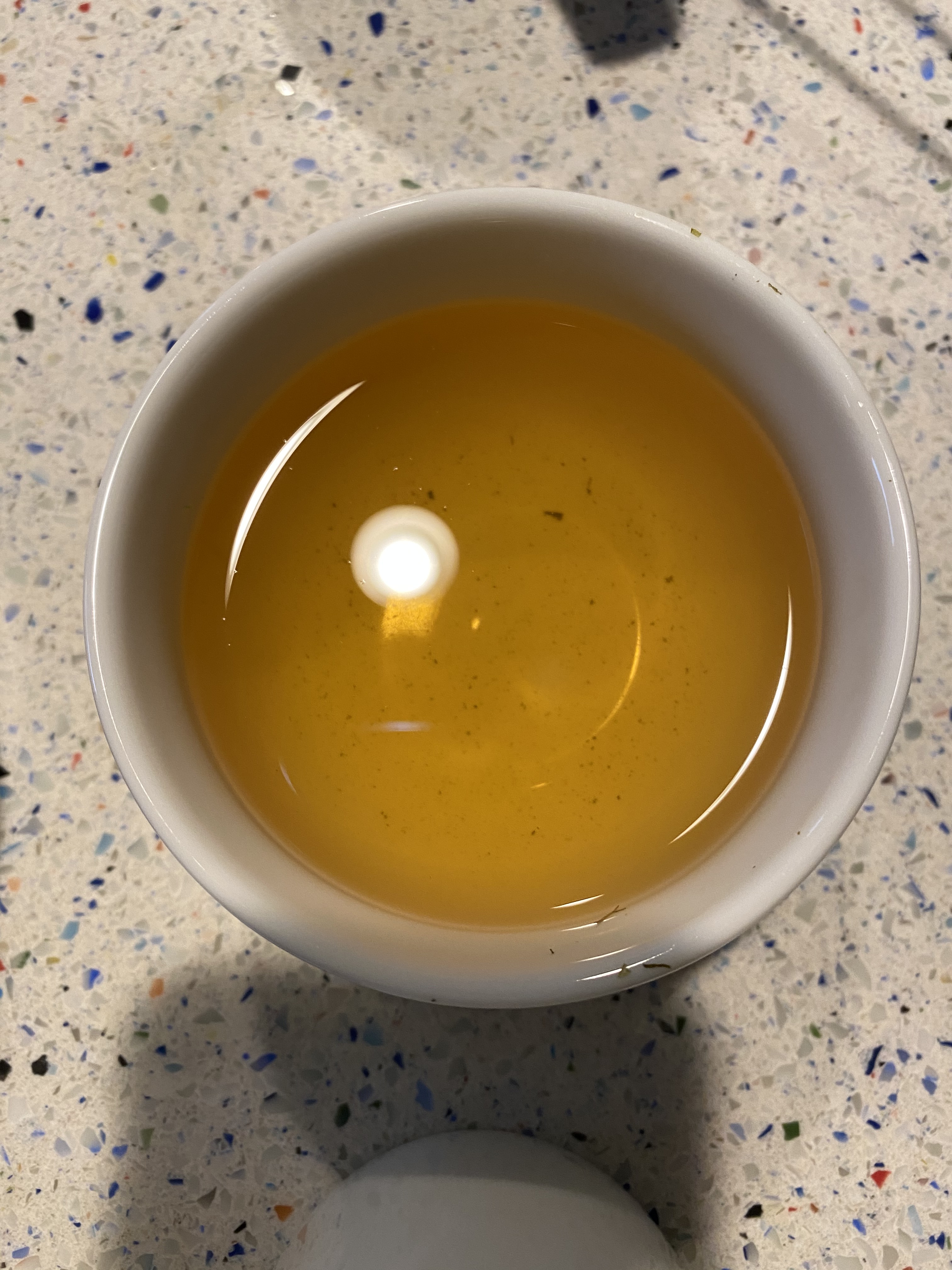
After roasting, the color of the tea stems turned from various shades of green to light and medium brown. The stems look less plump and more dehydrated. The tea liquor is more of an orange-amber shade now. The sweet grassy aroma is much nuttier, almost smoky. The flavor itself is indeed like roasted nuts. It also reminded me of sesame seeds. It became much smoother and sweeter. All bitterness is gone.
Are you convinced to try this at home? I hope you can give this a shot! It can be very rewarding and almost put you in the shoes of the tea producer 😛 Of course, it is nowhere near as challenging or rewarding as it must be for a tea master. Making tea really is an art. I must show thanks to the people who made this lovely karigane tea to begin with. I’m thinking of maybe roasting some more and trying it side by side with some hojicha that I purchased as well. In the mean time, keep drinking your tea and keep experimenting!
 Dina's Tea Notes