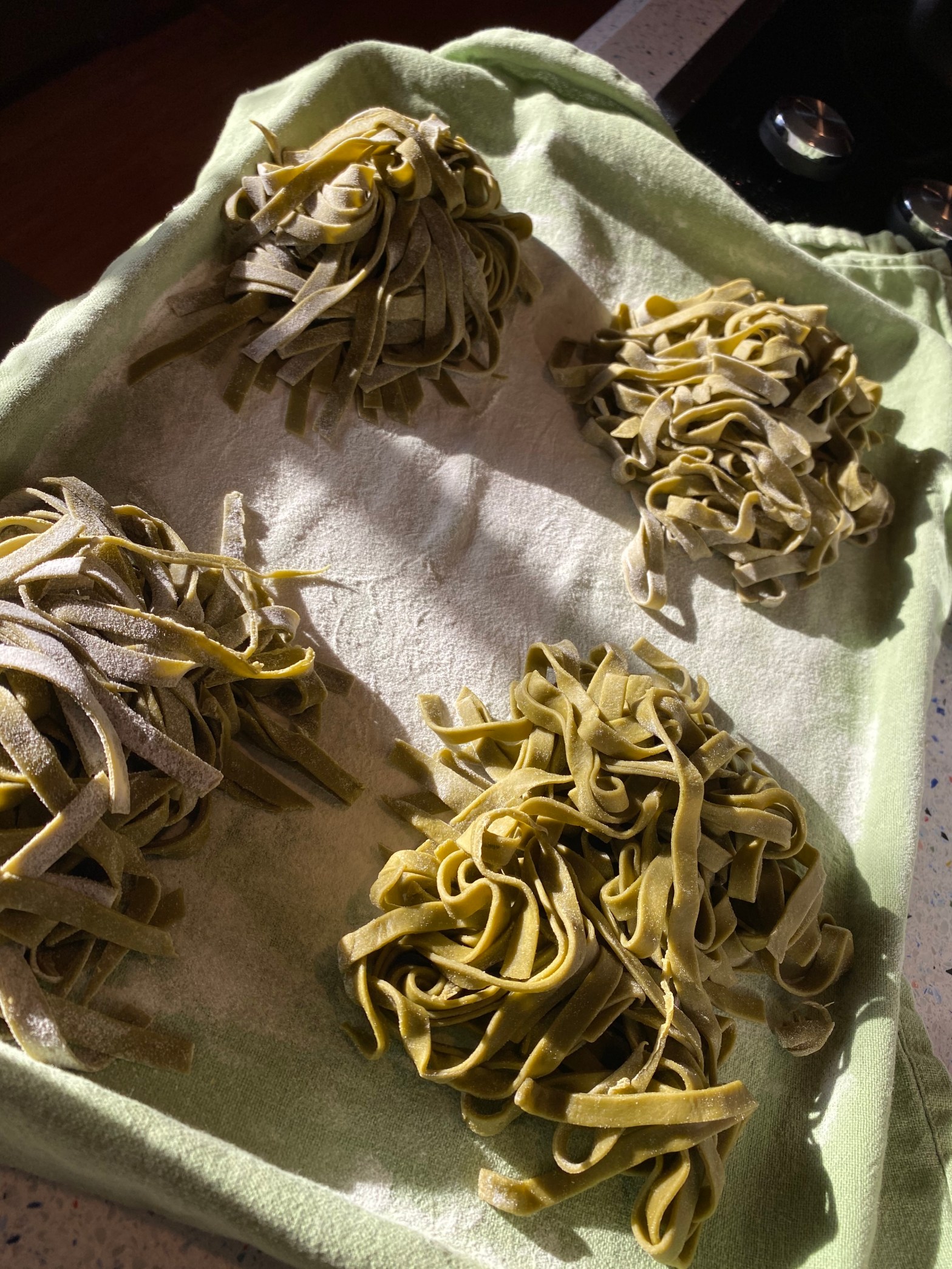
Pasta just seems so hard to make. I’ve always wanted to try. One of my most recent obsessions has been the Pasta Grannies series of videos. There is a Pasta Grannies cookbook, but I discovered the videos on Facebook. I love watching the talented ladies masterfully churn out perfect pasta without a second thought. I’m no expert like they are, but even I with the help of some useful tools was able to make some lovely handmade pasta. Of course, this isn’t a pasta blog. It’s a tea blog. You know where this is going.
I know, all I’ve been doing lately is using my culinary tea powders. The only tea powder I have left now is matcha and hojicha, so there could be more recipes with those someday. I just wanted to finally use the last of the unusual tea powders. Sencha is normally not in powder form. I think it’s more common to find in powder than say genmaicha, but still not typical. That being said, its color and flavor are not too dissimilar to matcha. Just for reference, I did compare the color and aroma to my matcha. The matcha that I happen to have seemed to have a slightly more sweet and almost milky aroma. The sencha was more grass forward.
Why pasta? I just wanted to try another savory recipe. I have seen matcha noodles in many different forms before, so it seemed appropriate. I have made plain pasta once before using the recipe in one of the most recent Joy of Cooking books. I toyed with different recipe ideas after doing some tea-based noodle research but ultimately decided to stick with Joy. I wondered if I should take out some of the flour since I was adding the tea powder, but thought better of it. The flour is what gives the pasta its delightful chewiness. The gluten is key. The tea may make it drier, but it doesn’t react to moisture in the same way that flour does. The Joy of Cooking recipe does mention that you can add a little water if it’s too dry. This was the ideal solution for me.
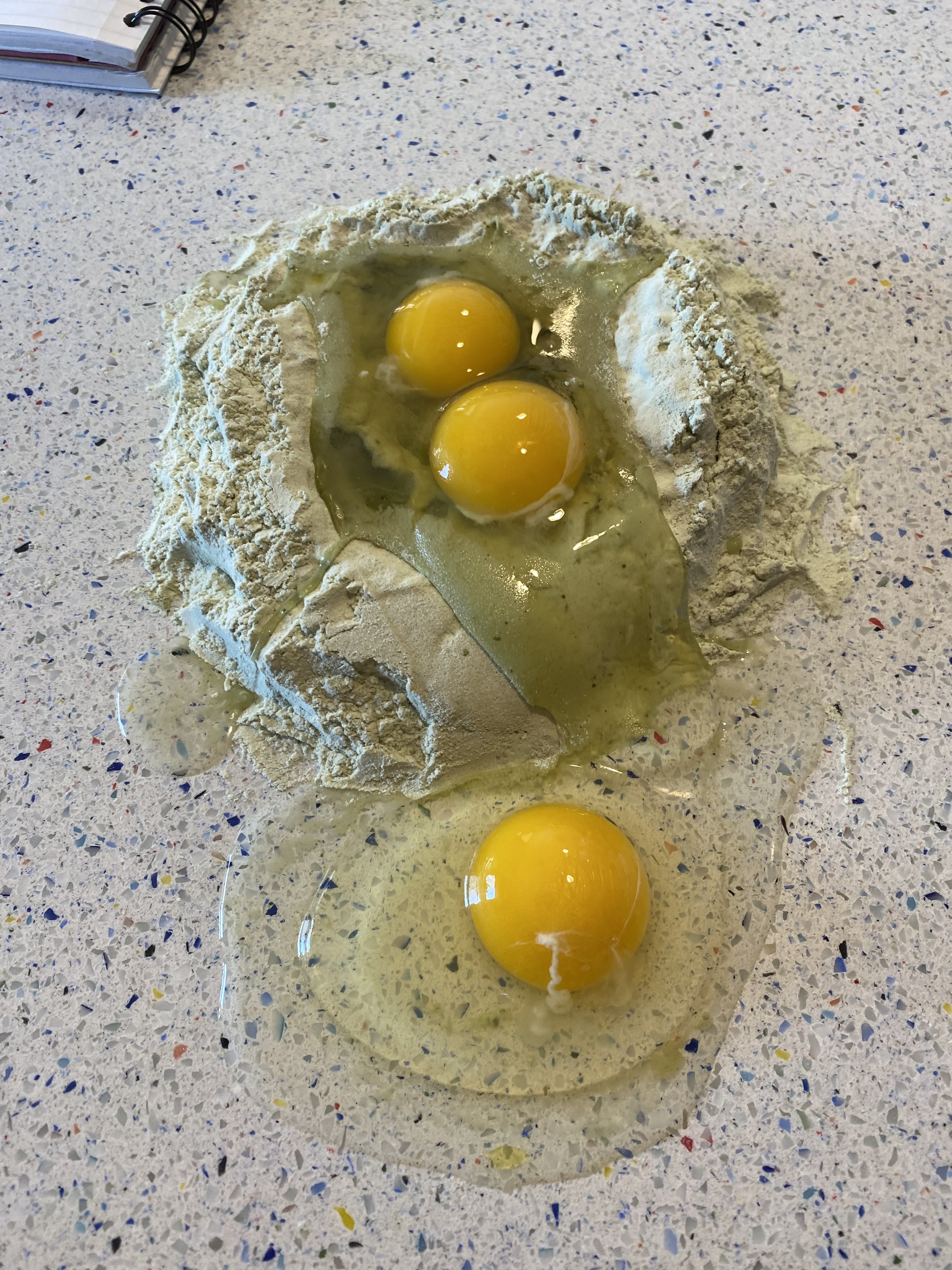
The fun thing about pasta is you can make it with very few tools if you want. I opted for somewhere in between. Since I’ve been watching Pasta Grannies so much, I just had to try mixing the dough by hand on the countertop. It was a fun challenge. I did almost lose an egg, so it’s important to make a large enough well in your flour mixture! After making the dough you can either roll it out by hand and cut them into thick strips or use a pasta machine. We recently purchased some pasta roller attachments for our mixer. They are SO much fun to use!
Here is the moment you have been waiting for!
Sencha Pasta
Modified from the Joy of Cooking recipe
Ingredients:
- 2 cups of AP flour
- 2 tbsp. Sencha or matcha powder (about 10 grams)
- 3 large eggs
- 1/2 tsp. salt
- 1 tsp. olive oil
- 1 tbsp. water
Procedure:
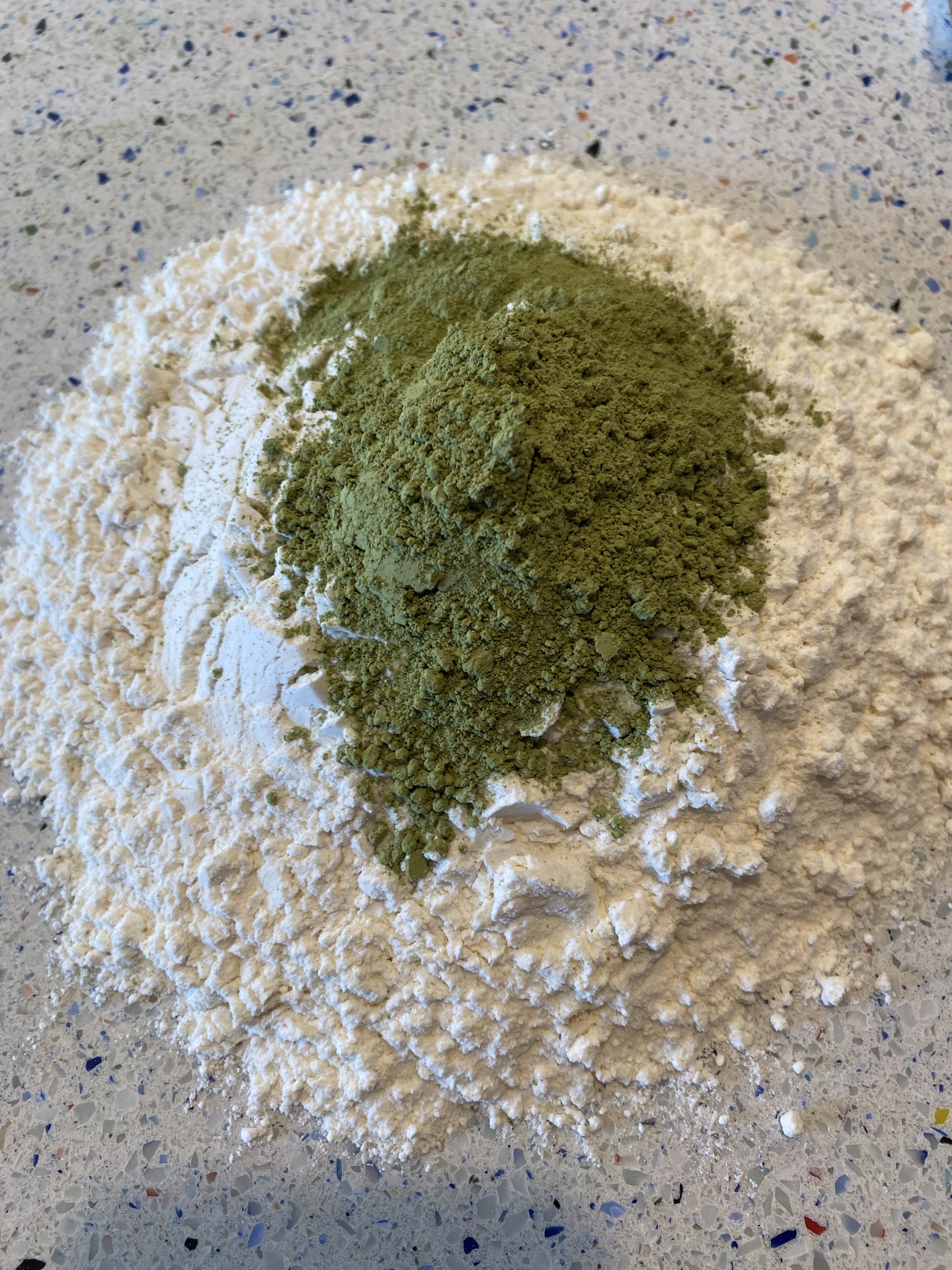
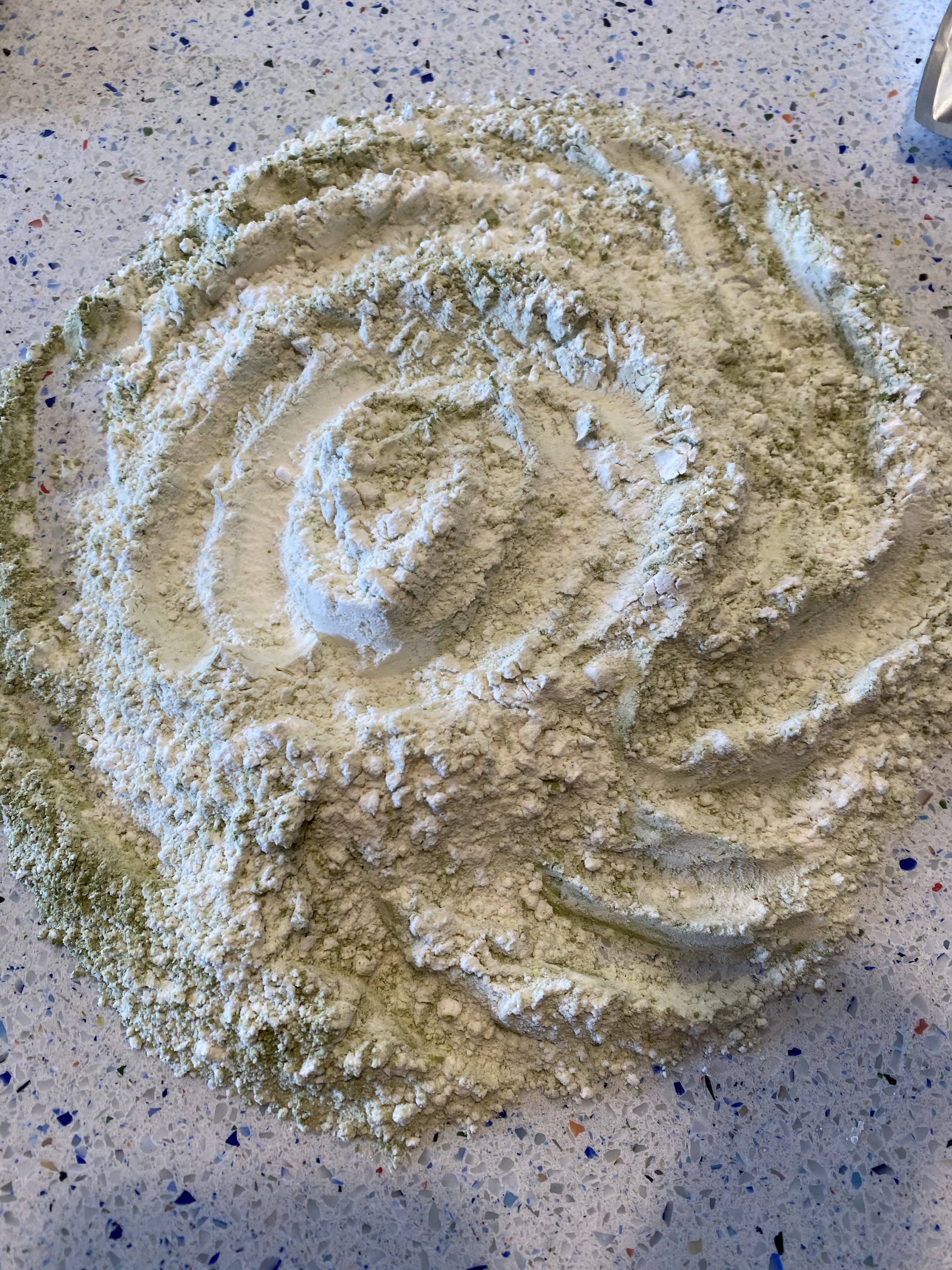
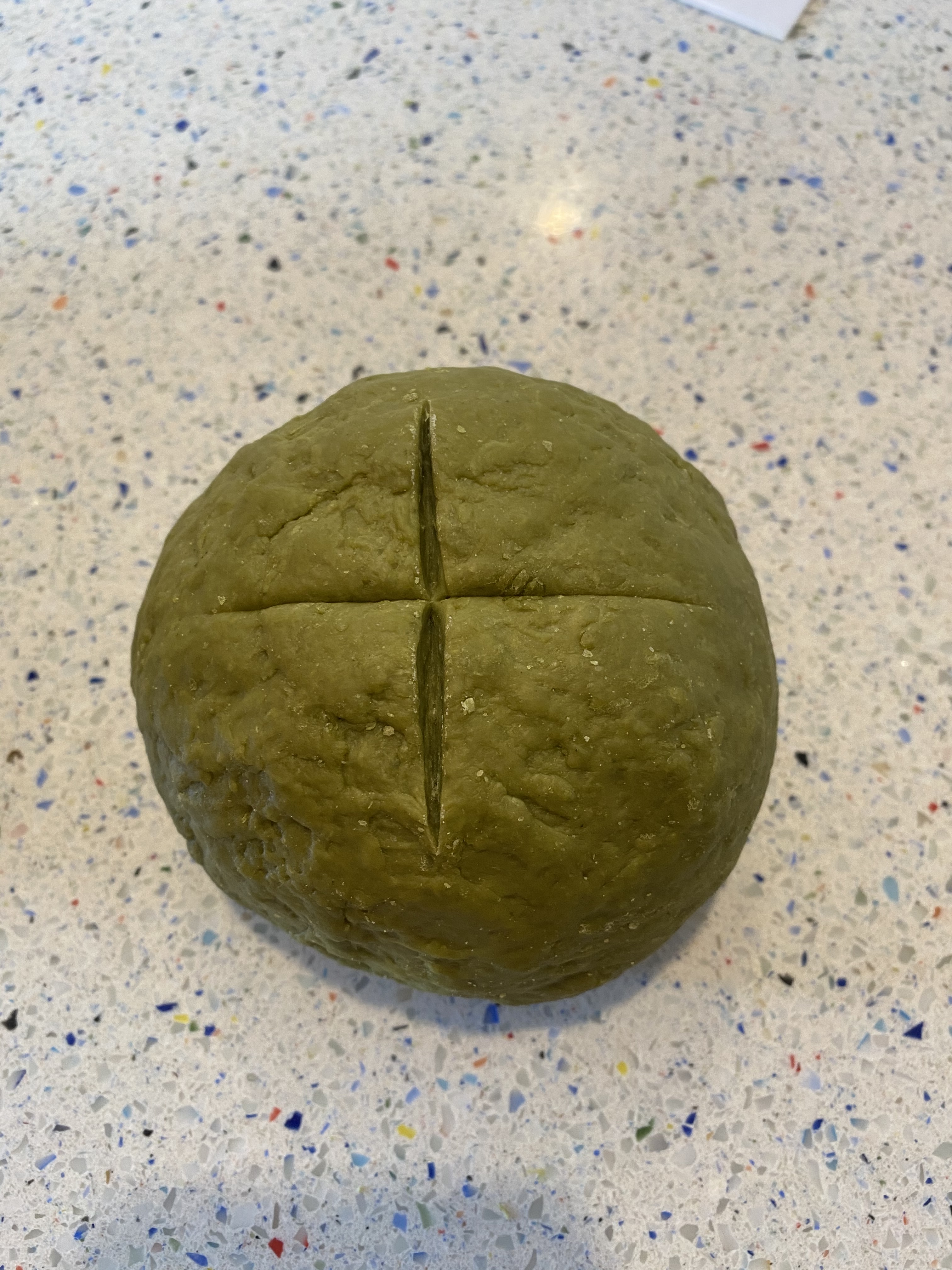
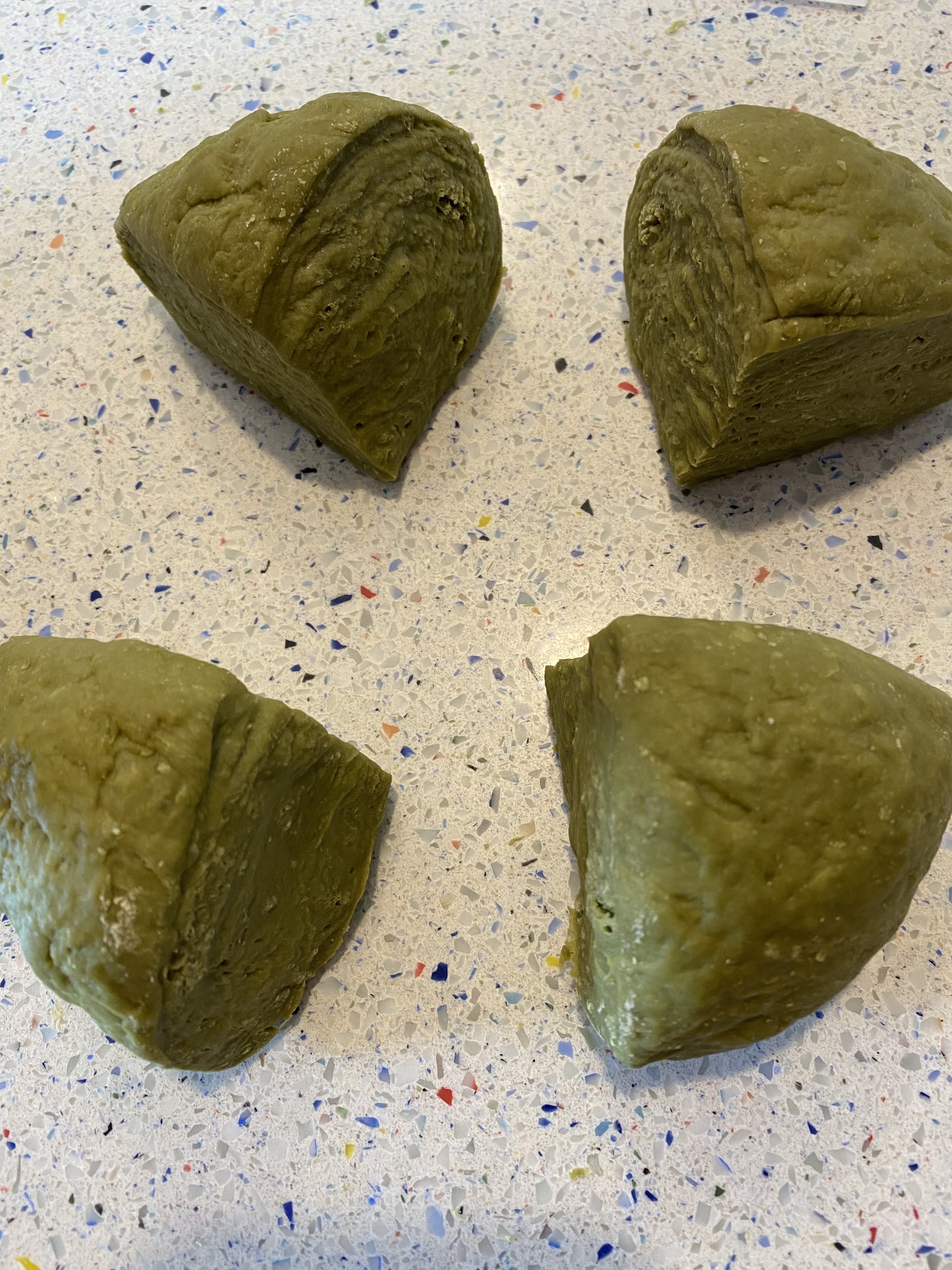
Place flour and sencha powder on a clean workspace. gently mix together with hand until uniform in color. Create a large enough well in the middle of the flour for three eggs. Add the salt, olive oil, and finally the eggs. gently and slowly mix a little flour into the egg mixture using your hand and a fork (don’t let your eggs escape!). When the dough is almost fully formed but you still have dry flour, add the tablespoon of water. When all dry ingredients are incorporated, start kneading by hand for about 10 min. The dough should be firm and smooth. Divide the dough into four pieces and cover with a bowl. Let sit for 30 min. If fully making by hand, roll out individual sections with a rolling pin until you reach your desired thickness. Make sure they are well floured. Fold into thirds and gently cut into thick fettuccine or linguine strips. Cover in more flour to prevent sticking. If using a pasta machine, follow the instruction booklet. You can set pasta out to dry for an hour or so on a floured tea towel. You can save it in the fridge for the next day (best if eaten within 24 hours) or you can cook right away. To cook, boil a large pot of water with a good amount of kosher or sea salt. Fresh pasta only needs about 30 seconds or so to reach al dente perfection.

You are probably wondering “What the heck do I serve with these noodles?”. For something that is so delicate in flavor, I knew I wanted something simple and spring inspired. The flavor of the noodles on their own is slightly nutty and grassy with a hint of pleasant bitterness at the end. I just used what we had in the house. Precooked frozen shrimp, chopped parsley, raw sugar snap peas, olive oil, lemon juice, salt, pepper, and some fresh parmigiano reggiano. I was still able to taste the subtle bitter tea notes at the end of each bite. Of course, I think this dish is best kept simple, even simpler than what I did. Plain with some butter or olive oil and a sprinkle of salt and pepper would also be divine. I highly advise you to keep away from tomato sauce for this one as it would completely mask the tea flavor. a very light cream sauce could be good however.
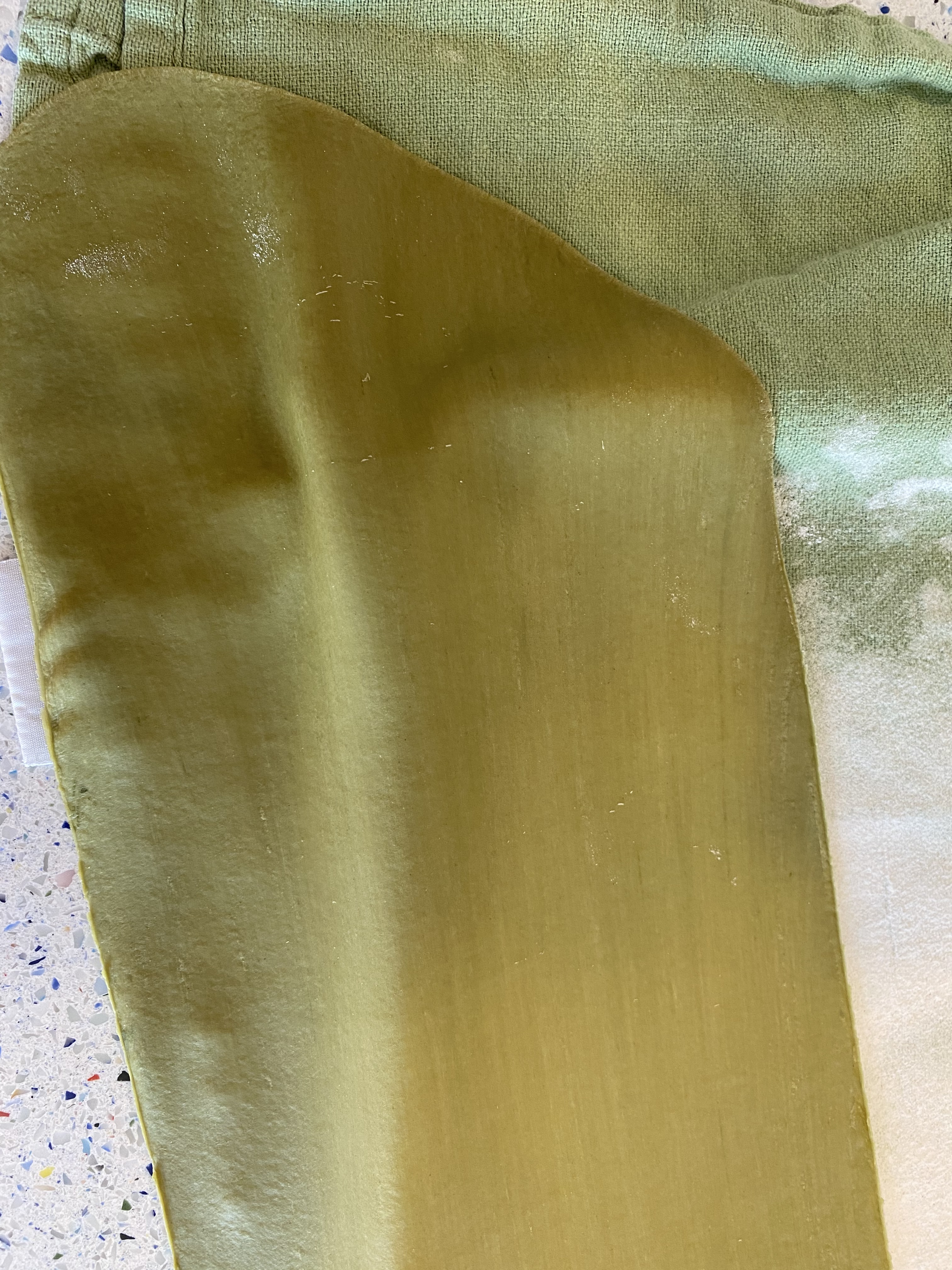
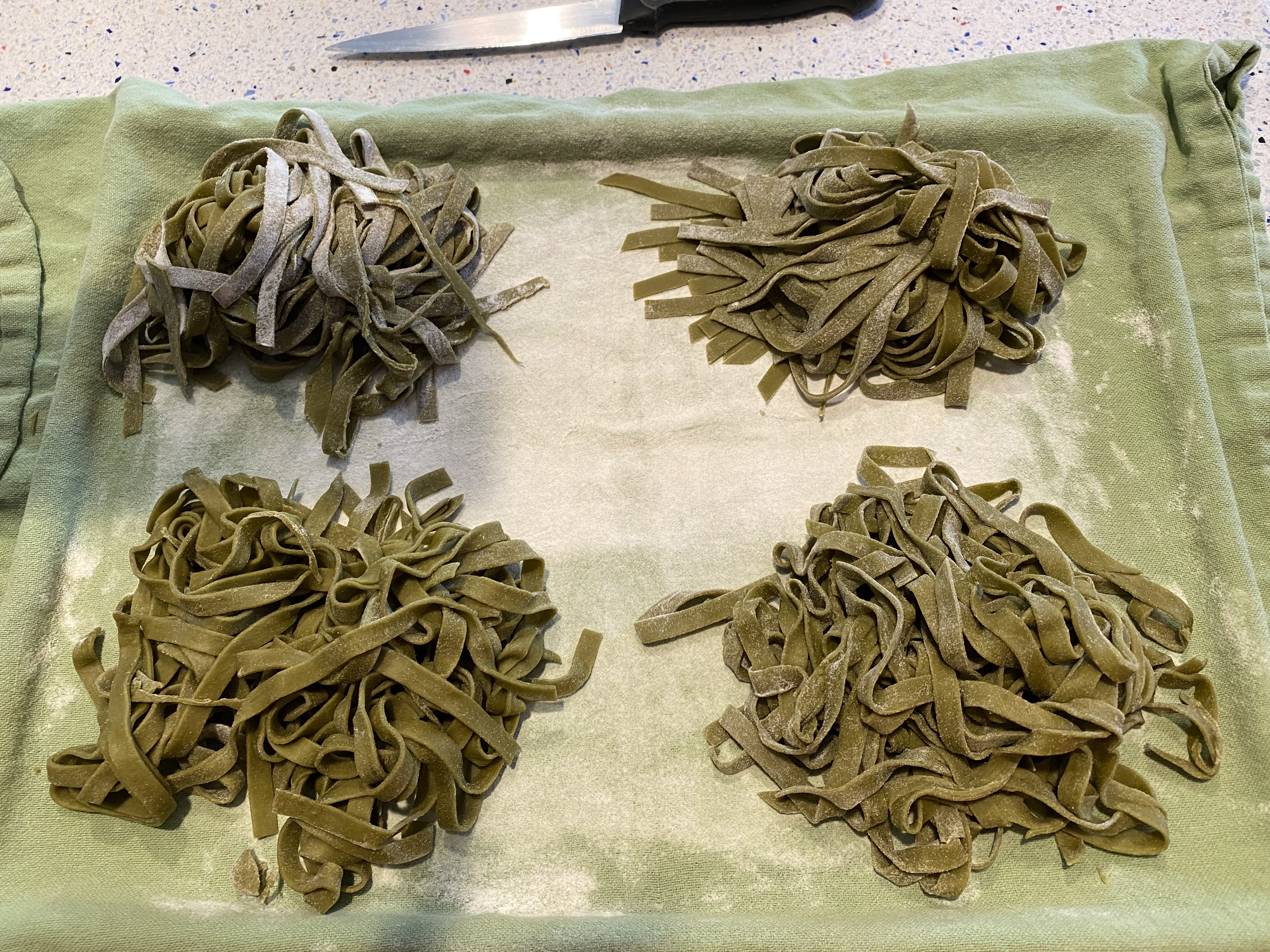
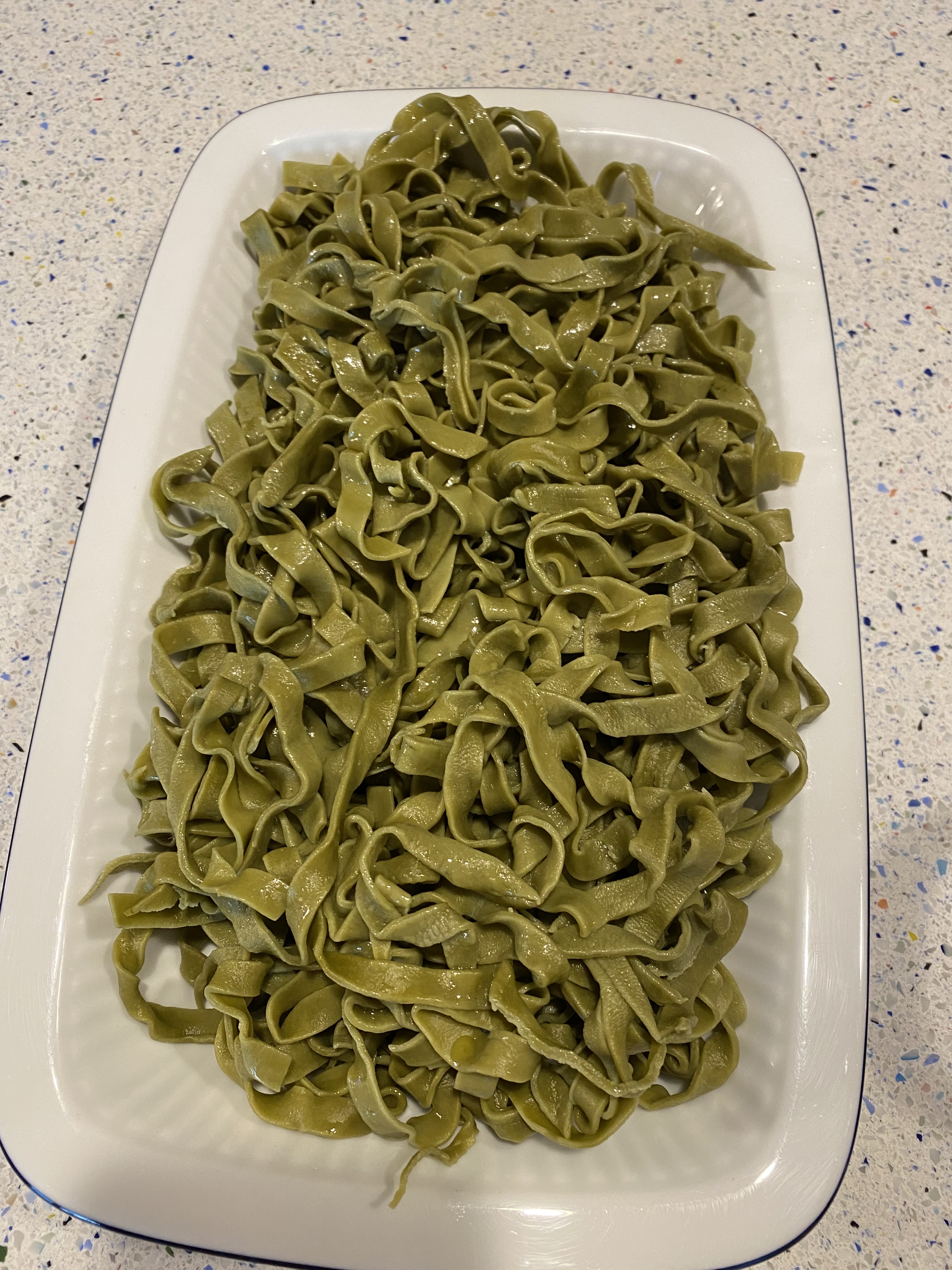
I’m very please with how they turned out. The whole process was just delightful. There was something so satisfying about feeding the pasta dough through the rollers. The sheets became beautiful pieces of edible fabric. I liked seeing the spots where I didn’t fully incorporate the tea. The streaky effect gave it a unique look and feel. Watching noodles being formed in front of my eyes was simply magical. I think if you do it all by hand, it will be all the more rewarding. you don’t need the fancy attachments, but they do help.
What do you think? Do you want to try this recipe? How would you serve your noodles? Would you prefer the traditional matcha soba served with a soy dipping sauce? I may try to make that someday as well. I hope to hear from you and maybe even see some photos of your pasta. What tea-infused recipes should I try next?
 Dina's Tea Notes
Never would have thought of combining the two! Definitely going to save this recipe for when I have the chance to make it myself
LikeLike