“In the beginner’s mind, there are many possibilities. In the expert’s mind, there are few.” -Shunryu Suzuki
Having a completely open mind on any given subject can be tough. Once you know a lot, it can be a hit to your ego if you are presented with information that you “already know”. Why are people assuming that you don’t know something when you spent so much time carefully studying that subject? I have been guilty of this way of thinking. I am trying harder to understand this weirdly cold way I have about myself. It’s not to say that you should pretend not to know something to appear more approachable. It’s just to say that even when presented with “old information”, you should keep an open mind. You could and probably will learn something completely new. You may even meet some interesting new people.
During this past year, I’ve really tried to re-evaluate my approach to learning new information. I’m trying to instill in my mind that I will never know everything. I simply need to adopt a more dynamic approach. I want to mold my fixed mind into a fluid one. This can of course be used in any and every context, but most certainly fits the world of tea.
Zen Buddhism is closely associated with tea and the concept of “beginner’s mind”. The quote at the beginning of this blog is by a Zen Buddhist monk and teacher who popularized Zen Buddhism in the states. Shunryu Suzuki only realized that he had the power to change critics in their opinions of Buddhism and Japan when he met a skeptical English teacher. From there, he eventually went on to teach Americans about Buddhism and the importance of having a beginner’s mind. There are many simple ways in which you could connect this philosophy with the Japanese tea ceremony but also with a more casual approach to tea.
One of the most approachable ways you could test out your beginner’s mind is through steeping and re-steeping your tea, making note of the subtle changes in aroma and flavor. Has the tea become more floral? More smoky? Or maybe the third steep was less grassy than the first. Do you know the whole story of the tea? Who picked it and where? The soil that gave it the very characteristics you are enjoying? Even if you do “know” all these things, what else could you investigate about that tea?
Even the very way you brew the tea can change your mind. Western-style is accessible to all, but gong-fu is fast becoming more prevalent. This method calls for large amounts of leaf to small amounts of water along with short infusion times. You can truly get to know the full flavor and character of any given tea when brewing this way. Even certain brewing vessels such as clay pots could bring out flavors that you never would have approached had you only stuck with glazed ceramics.
You may think you’ve tried one tea, so you’ve tried them all. You may have decided you hated it. Tea is an agricultural product. Much the same as wine, the soil and climate will change the way the fresh leaves grow and thrive. From there, the tea farmers and producers work tirelessly to produce a unique product. No two oolongs are exactly the same, even if all true tea comes from virtually the same plant.
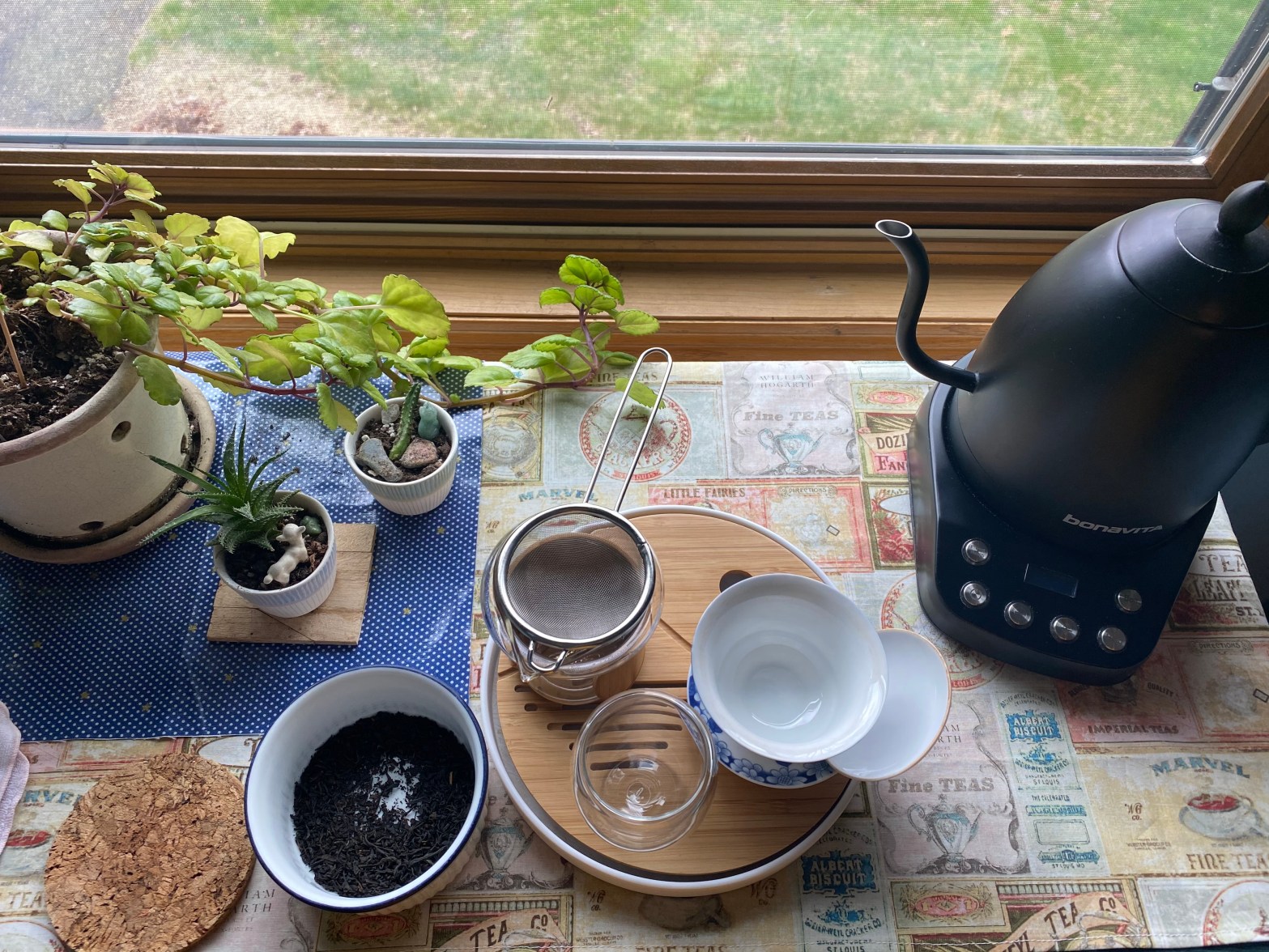
Now I’m enjoying some tea in the gong-fu method. I know there is much for me to learn about this brewing style, so I have joined a group on Facebook. It’s just one small thing I’ve done to try to educate myself and meet new people who know much more about the history, the artifacts, the beauty of this tradition. I know that no matter how much I learn about tea, there is always something yet to be known.
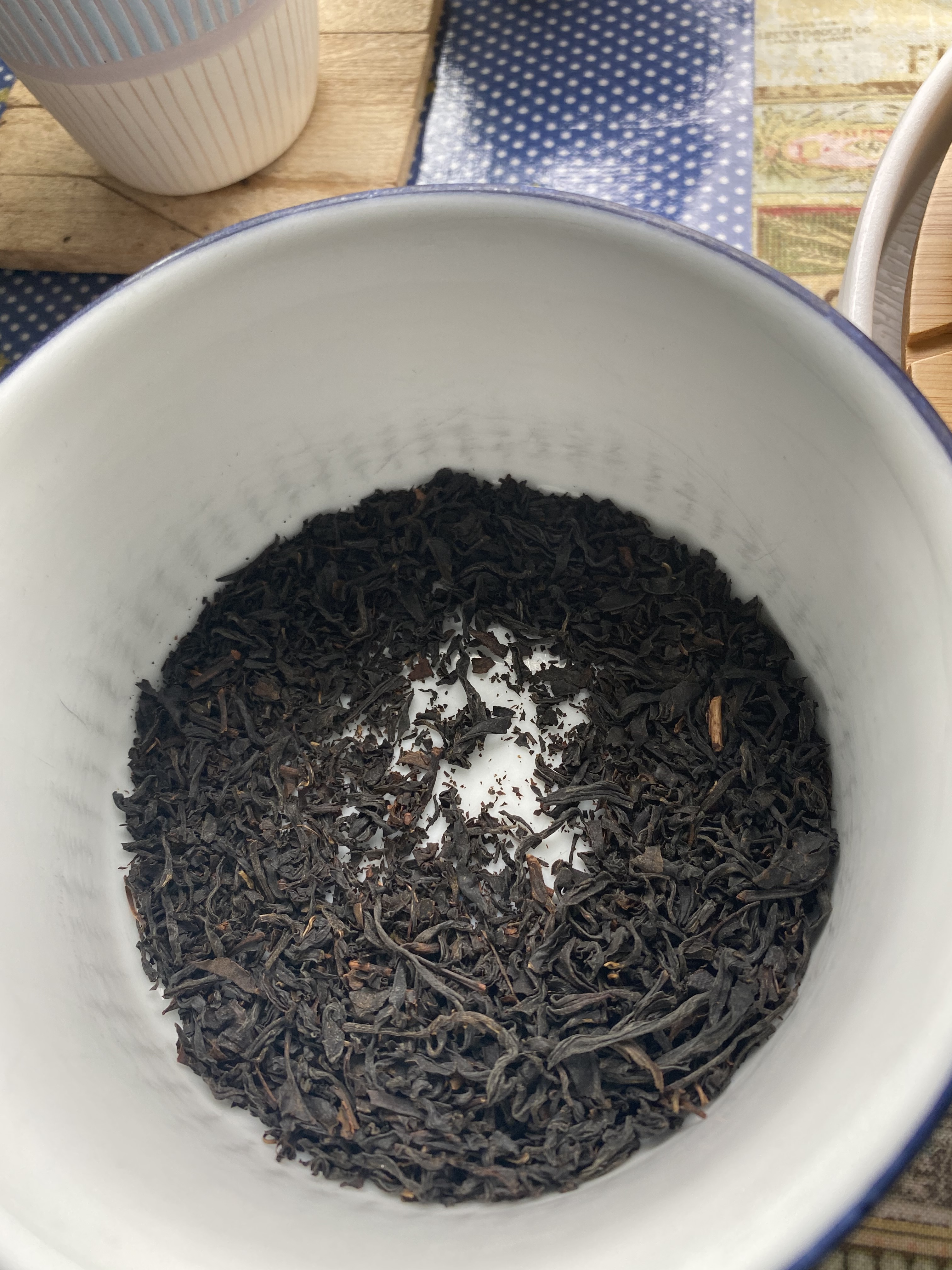
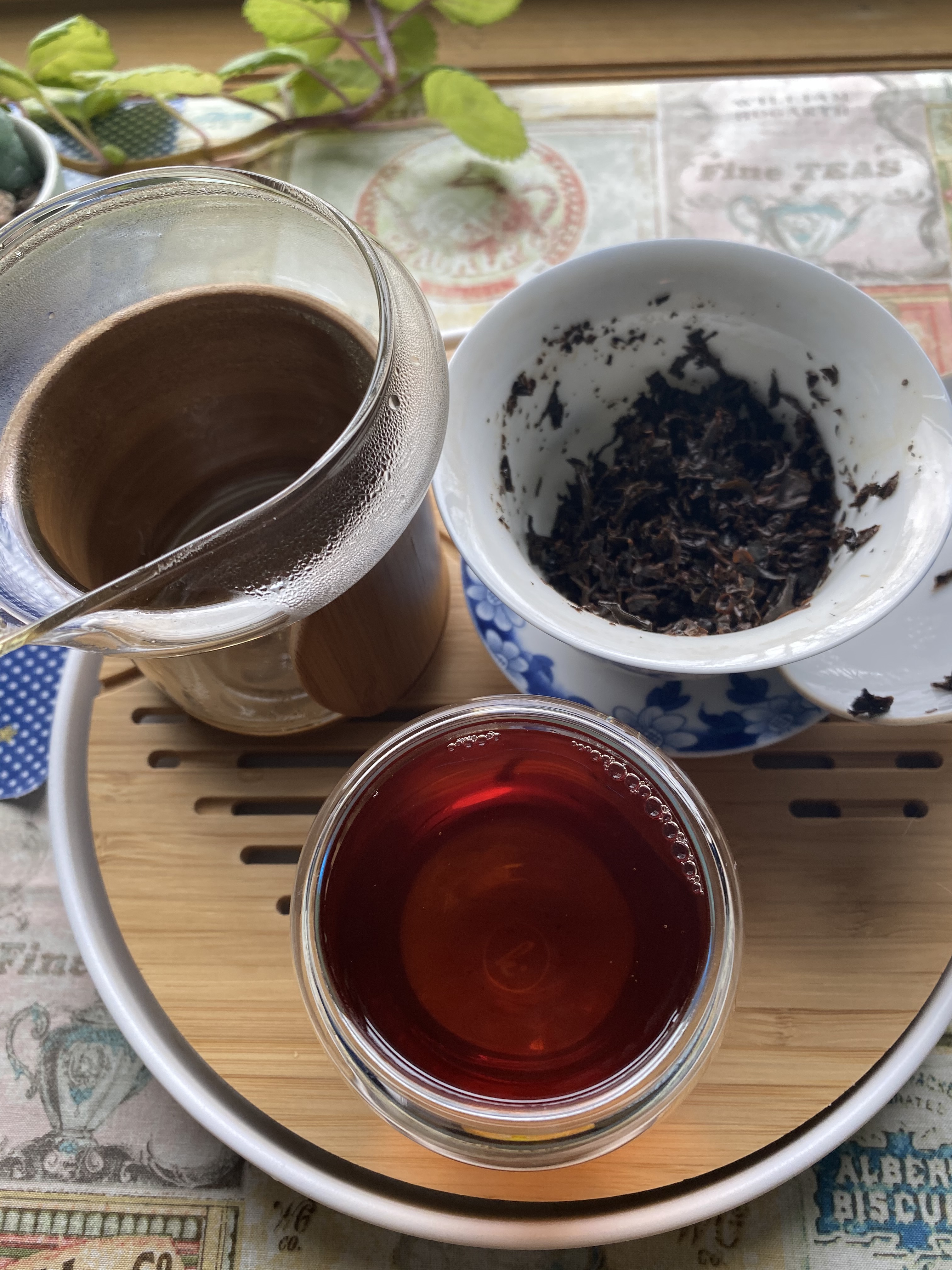
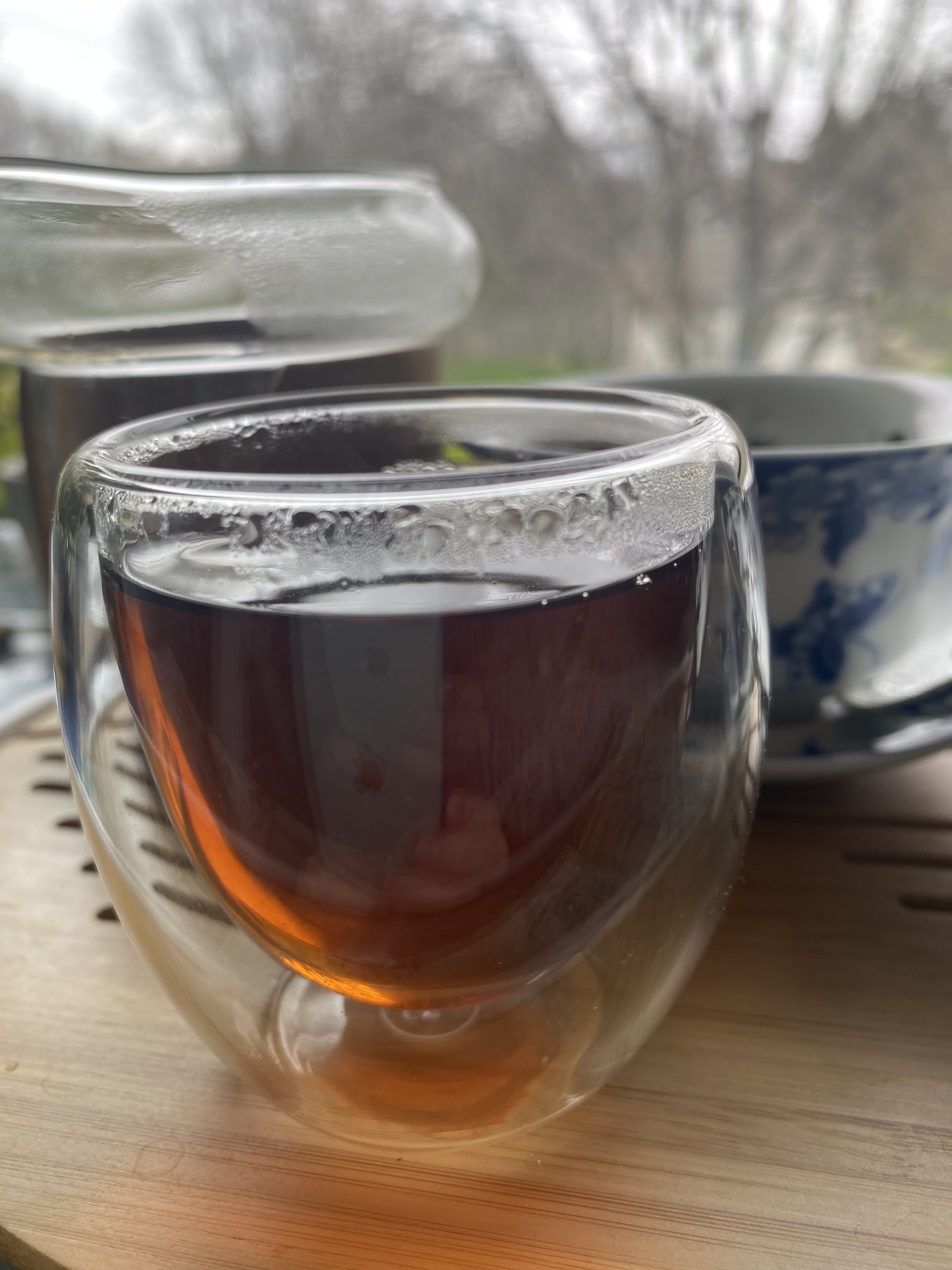
The tea I’m drinking is called “Golden Buddha”. I chose this tea purposely of course. It’s one of my favorite Chinese black teas I’ve ever had. As I sip, I try to focus on the aroma and flavor. Is it the same to me as the last time I had it? It’s just as warm, smoky, and comforting as I remember. Perhaps there is more I can learn. The tea was purchased at my favorite local tea shop. The description says, “These long, black, hand-made leaves from Fujian produce an aroma that is sweet and rich. The cup is very complex and balanced.”. I know Fujian is an area well known for their oolong tea, so it’s fascinating to try a black tea from there that almost reminds me of a long oxidized oolong. It would be so great to be able to visit the people who made such a tea in person some day. I will be sure to keep my ego in check if I ever do.
 Dina's Tea Notes