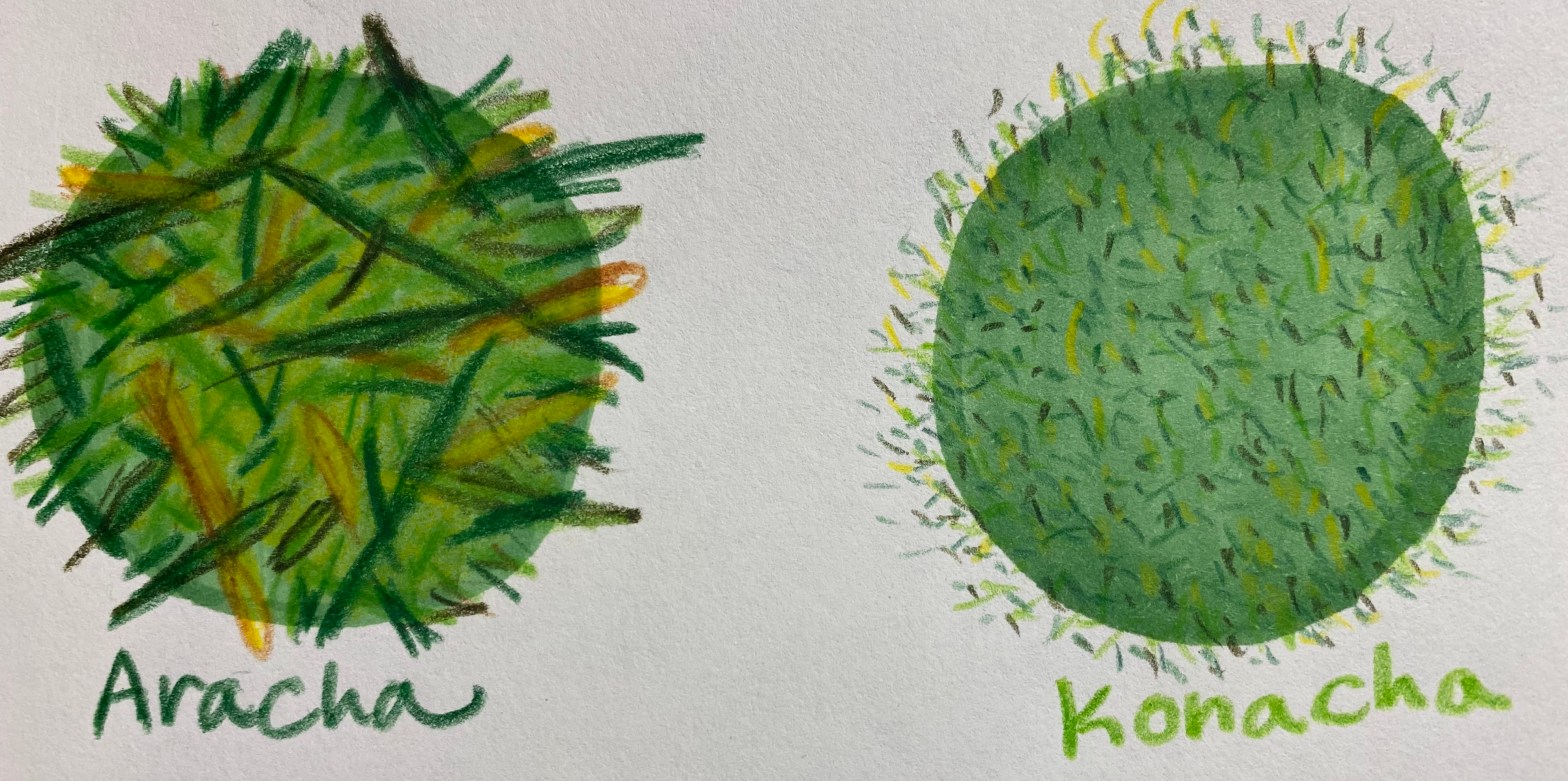
In the production of tea, there are many steps. The first steps will produce a tea that could possibly be sold and consumed just as it is. They usually aren’t, but there are a few exceptions that have been popping up on the tea market as of late. In Japanese, these are called aracha or “unrefined” tea. Sometimes, they are made of parts of tea that would normally get wasted all together or used for something other than drinking. I want to take a look at these lesser known products to shine some light on the different possibilities for tea sustainability.
Tencha is high quality and is used to produce teas such as gyokuro and matcha. The leaves are heavily shaded from the sun to produce more chlorophyll and thus the tencha gives the resulting teas a strong umami or savory character. Tencha is not really meant to be sold as a finished tea, but demand has been going steady for it’s unique flavor and aroma. The appearance of tencha is also very unique. It looks like little pieces of confetti in different shades of green, nothing like the matcha it is ground into or gyokuro that is carefully shaped into needles. Since it doesn’t go through the rolling process, the flavor tends to be much more delicate.

One incredibly unique byproduct of tea production is dangocha. I had come across this name when looking through an online Japanese tea shop in the past year. The name and photo struck me as so fascinating. The word dango usually refers to little round rice cakes or basically anything that is round. Looking at the photo, the tea definitely looked more rotund than I was expecting. They resembled long and thick spools of thread. I learned that it is a byproduct of making gyokuro! The website I found it on even said you could eat the raw tea bundles as a snack. This too is not normally sold as a finished tea and is still not seemingly well known outside of Japan. unfortunately (for me), the tea was so fascinating for so many people that they sold out before I had the chance to try it. Hopefully I can do a review sometime in the future!
Then there is the humble konacha. It’s the dust and fannings that often makes up tea bags. It can also be found sold in loose form and is a very economic choice that still tastes as nice as the sencha it came from.
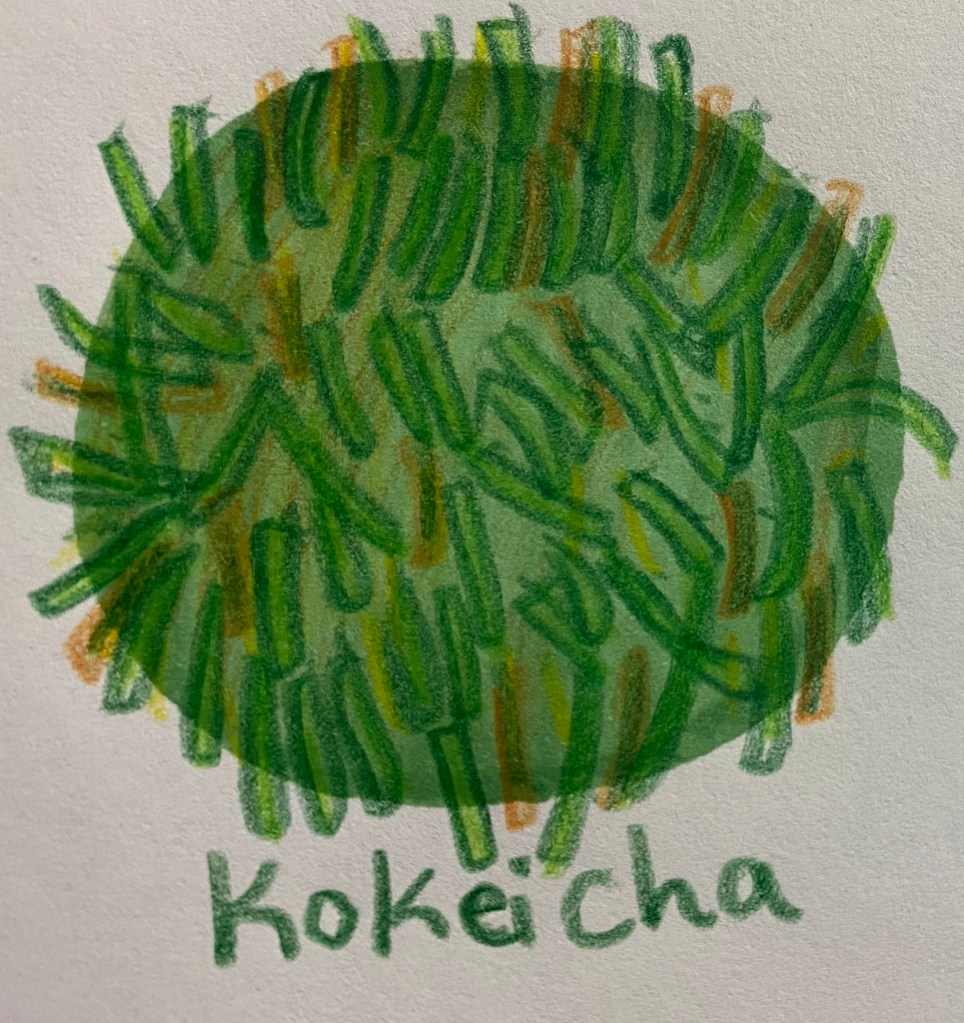
Kokeicha or “fixed form” tea is really fascinating. It was actually invented in the 1950’s as a way to use up konacha. Apparently konacha was not originally consumed at all even in tea bags. It was instead used as fertilizer, but a tea merchant had a great idea to press the fannings and dust into needle shapes similar to sencha. He did this because the powder tea wasn’t as appealing to customers. He successfully limited some waste involved in the tea processing world. Kokeicha isn’t so well known, but it is an interesting look at tea ingenuity.
Of course there are many more byproducts made from tea. There are even some that are not edible, like clothing, soap, and pillows! This was just a brief look at the fascinating world of tea byproducts. I love to see that there are some ways in which the tea world can in fact be sustainable. What are some tea byproducts you enjoy? What are some other ways tea can become more sustainable? Let me know your thoughts!
 Dina's Tea Notes